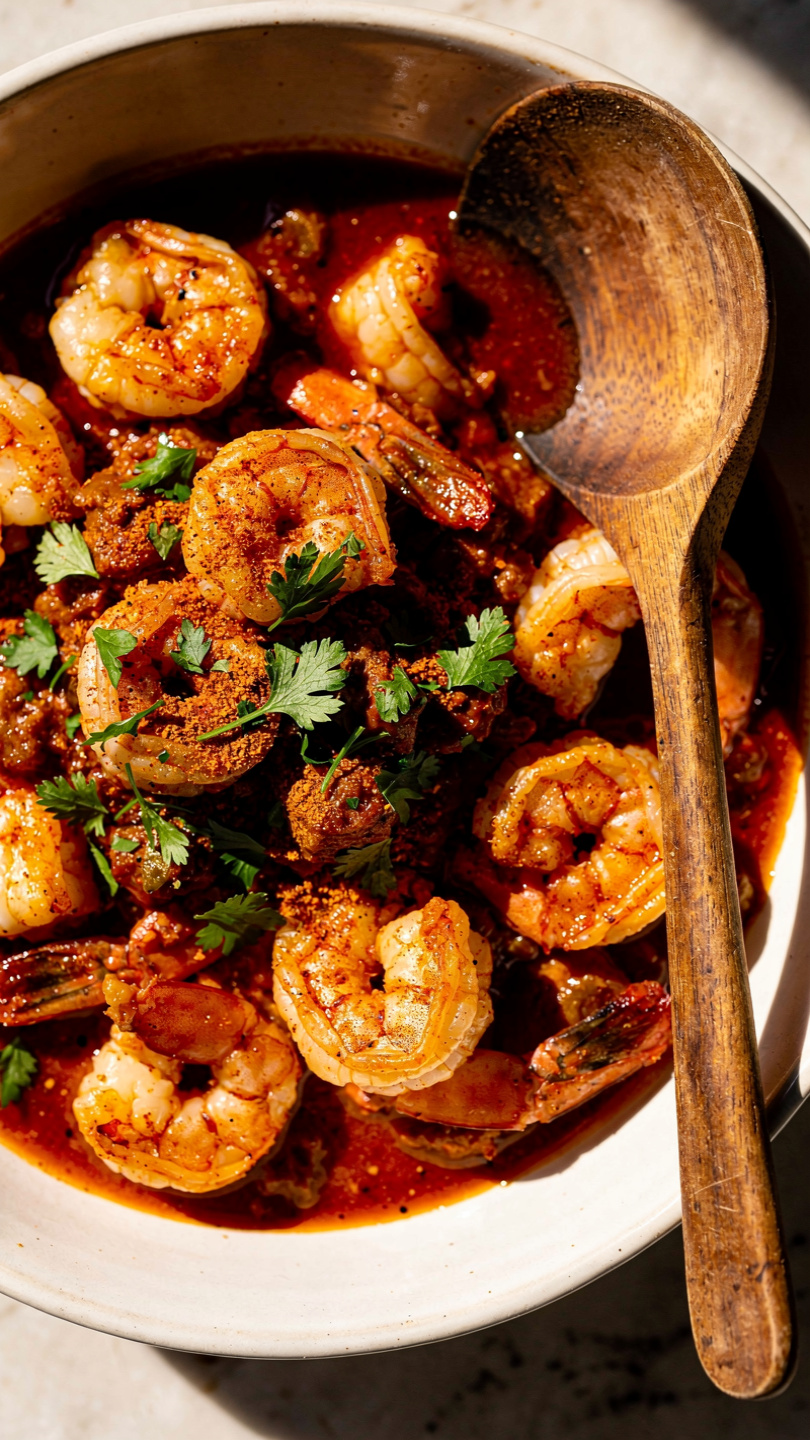
Shrimp Étouffée
This Southern Shrimp Étouffée is a rich, buttery Cajun classic smothered in a deeply flavorful sauce and served over fluffy white rice, ready in under an hour.

The Southern Classic That Belongs in Your Weekly Rotation
If you have never made a proper Southern Shrimp Étouffée, you are in for something special. This is the kind of dish that wraps around you like a warm hug on a cold night, the kind of meal that makes people close their eyes after the first bite and just nod. It is buttery, deeply savory, layered with Cajun spice, and served over a mound of fluffy white rice that soaks up every drop of that incredible sauce.
The name comes from the French word for "smothered," and that is exactly what happens here. Plump, juicy shrimp are smothered in a rich, roux-based sauce built on the Cajun holy trinity of onion, celery, and bell pepper, then brightened with a squeeze of fresh lemon and piled high with green onions and parsley. It is bold, comforting, and surprisingly approachable for a weeknight cook.
Whether you are searching for an easy shrimp étouffée dish for a casual dinner or you want to bring a little New Orleans magic to your table, this recipe delivers every single time.
What Makes This Recipe Work
A great étouffée lives and dies by a few key decisions, and once you understand them, you will have the confidence to make this dish your own.
The roux is non-negotiable. Butter and flour cooked together until they turn a warm, golden peanut-butter color is what gives the sauce its body, depth, and that unmistakable nutty richness. Skip it or rush it and you lose everything that makes étouffée étouffée.
The holy trinity does the heavy lifting. Onion, celery, and green bell pepper are the aromatic backbone of virtually every great Cajun and Creole dish. Take your time softening them in the roux. That patience pays off in flavor.
Do not overcook the shrimp. This is the most common mistake people make. Shrimp cook in 3 to 4 minutes, full stop. Add them at the very end, cook just until pink, and get the dish to the table. Rubbery shrimp can ruin an otherwise perfect sauce.
Chef's Tip: Season your shrimp separately before they go into the pot. Tossing them with a bit of Cajun seasoning beforehand builds flavor directly into the protein, not just the sauce around it.
The Right Tools and Ingredients Matter Here
A heavy-bottomed skillet or Dutch oven is genuinely important for this recipe. It distributes heat evenly so your roux cooks without scorching and your sauce simmers gently without hot spots. Good Cajun seasoning and a quality hot sauce like Crystal or Tabasco also make a noticeable difference in the final depth of flavor.
Building the Sauce: A Step-by-Step Guide
If you have never made a roux before, do not be intimidated. It is simply fat and flour cooked together, and once you see it turn that gorgeous golden color and smell the nuttiness come through, you will know exactly what you are doing.
Here is the basic flow:
- Make the roux. Butter and flour over medium heat, whisking constantly for 3 to 4 minutes.
- Cook the trinity. Onion, celery, and bell pepper go in next, softening and sweating into the roux for 6 to 8 minutes.
- Add aromatics. Garlic, Cajun seasoning, paprika, thyme, and bay leaves layer in next.
- Stream in the stock. Add it slowly, whisking as you go to keep the sauce smooth and lump-free.
- Simmer and thicken. Let the sauce bubble gently for 10 to 12 minutes, enriching and concentrating as it reduces.
- Finish with butter and shrimp. A final knob of butter makes the sauce glossy and luxurious. Then the shrimp go in for just a few minutes at the very end.
The whole process from start to finish takes under an hour, which makes this a genuinely quick shrimp étouffée meal that does not taste quick at all.
Chef's Tip: If your sauce looks too thick before adding the shrimp, stir in a splash more stock. If it looks too thin, let it simmer a few minutes longer uncovered. The sauce will continue to thicken slightly as it sits, so aim for a consistency that coats a spoon well.
How to Serve Shrimp Étouffée Like a Pro
The classic presentation is straightforward and gorgeous. Mound a generous scoop of long-grain white rice in the center of a wide, shallow bowl. Ladle the shrimp étouffée all around and over the top. Scatter sliced green onions and fresh parsley generously over everything, and set a few lemon wedges on the side for anyone who wants an extra squeeze of brightness.
For a heartier spin that shows you how to make shrimp and sausage étouffée, simply brown sliced andouille sausage in the pan before building the roux. The smoky, spiced sausage adds another dimension that takes the dish somewhere even more deeply Southern.
Ready to bring this big easy shrimp étouffée dish to your table? Here is the full recipe:
Shrimp Étouffée
This Southern Shrimp Étouffée is a rich, buttery Cajun classic smothered in a deeply flavorful sauce and served over fluffy white rice, ready in under an hour.
Ingredients
- 1 1/2 lb large shrimp, peeled and deveined, tails removed
- 6 tbsp unsalted butter, divided
- 1/4 cup all-purpose flour
- 1 yellow onion, finely diced
- 3 celery stalks, finely diced
- 1 green bell pepper, finely diced
- 4 garlic cloves, minced
- 2 cups seafood or chicken stock, low sodium preferred
- 1 tbsp Worcestershire sauce
- 1 tsp hot sauce, such as Crystal or Tabasco, plus more to taste
- 1 1/2 tsp Cajun seasoning, store-bought or homemade
- 1/2 tsp smoked paprika
- 1/2 tsp dried thyme
- 2 bay leaves
- 1/2 tsp kosher salt, plus more to taste
- 1/4 tsp black pepper, freshly ground
- 4 green onions, thinly sliced, for garnish
- 2 tbsp fresh flat-leaf parsley, chopped, for garnish
- 4 cups cooked long-grain white rice, for serving
- 1/2 lemon, juiced, for finishing
Instruction
Season the peeled and deveined shrimp with 0.5 tsp of the Cajun seasoning and a pinch of salt. Toss to coat and set aside in the refrigerator while you build the sauce.
In a large, heavy-bottomed skillet or Dutch oven, melt 4 tbsp of the butter over medium heat. Once foaming subsides, whisk in the flour and cook, stirring constantly, for 3 to 4 minutes until the roux turns a light peanut butter color and smells nutty.
Add the diced onion, celery, and green bell pepper (the holy trinity) to the roux. Cook, stirring frequently, for 6 to 8 minutes until the vegetables have softened and the onion is translucent.
Stir in the minced garlic and cook for 1 minute more until fragrant.
Slowly pour in the stock a little at a time, whisking constantly after each addition to prevent lumps. Add the Worcestershire sauce, hot sauce, remaining 1 tsp Cajun seasoning, smoked paprika, dried thyme, and bay leaves. Stir well to combine.
Bring the sauce to a gentle simmer over medium-low heat and cook uncovered for 10 to 12 minutes, stirring occasionally, until the sauce thickens enough to coat the back of a spoon.
Add the remaining 2 tbsp of butter and stir until fully melted and incorporated into the sauce. Taste and adjust salt, pepper, and hot sauce as desired. Remove and discard the bay leaves.
Add the seasoned shrimp to the skillet in a single layer. Cook, stirring gently, for 3 to 4 minutes just until the shrimp turn pink and opaque. Do not overcook. Squeeze the half lemon over the top and stir.
Spoon the étouffée over bowls of warm cooked rice. Garnish generously with sliced green onions and fresh parsley. Serve immediately.
Equipment
- Large heavy-bottomed skillet or Dutch oven
- Whisk
- Wooden spoon or silicone spatula
- Chef's knife and cutting board
- Measuring cups and spoons
- Medium saucepan (for rice)
Notes
Storing and Reheating Leftovers
If you are lucky enough to have leftovers, store the étouffée in an airtight container in the refrigerator for up to 3 days, keeping the rice separate so it does not absorb all the sauce overnight.
Reheat gently on the stovetop over low heat, adding a splash of chicken or seafood stock to loosen the sauce back to its original consistency. Avoid blasting it on high heat, especially in the microwave, as this is the fastest way to turn those beautiful shrimp rubbery.
The sauce base on its own, made ahead without the shrimp, freezes beautifully for up to 2 months. Thaw it overnight in the refrigerator, reheat, and finish with a fresh batch of shrimp for a weeknight dinner that feels like you planned it all along.
Why This Recipe Earns a Permanent Spot in Your Kitchen
Shrimp étouffée recipes come in many forms, but what makes this one stand out is the balance. It is deeply seasoned without being one-dimensional. It is rich without being heavy. And it is genuinely approachable, even for someone making it for the very first time.
This is the kind of easy shrimp étouffée that impresses dinner guests but is simple enough for a Tuesday. Once you make it, you will find yourself coming back to it again and again, tweaking the heat level, swapping in sausage, or doubling the batch because one pot is never quite enough.