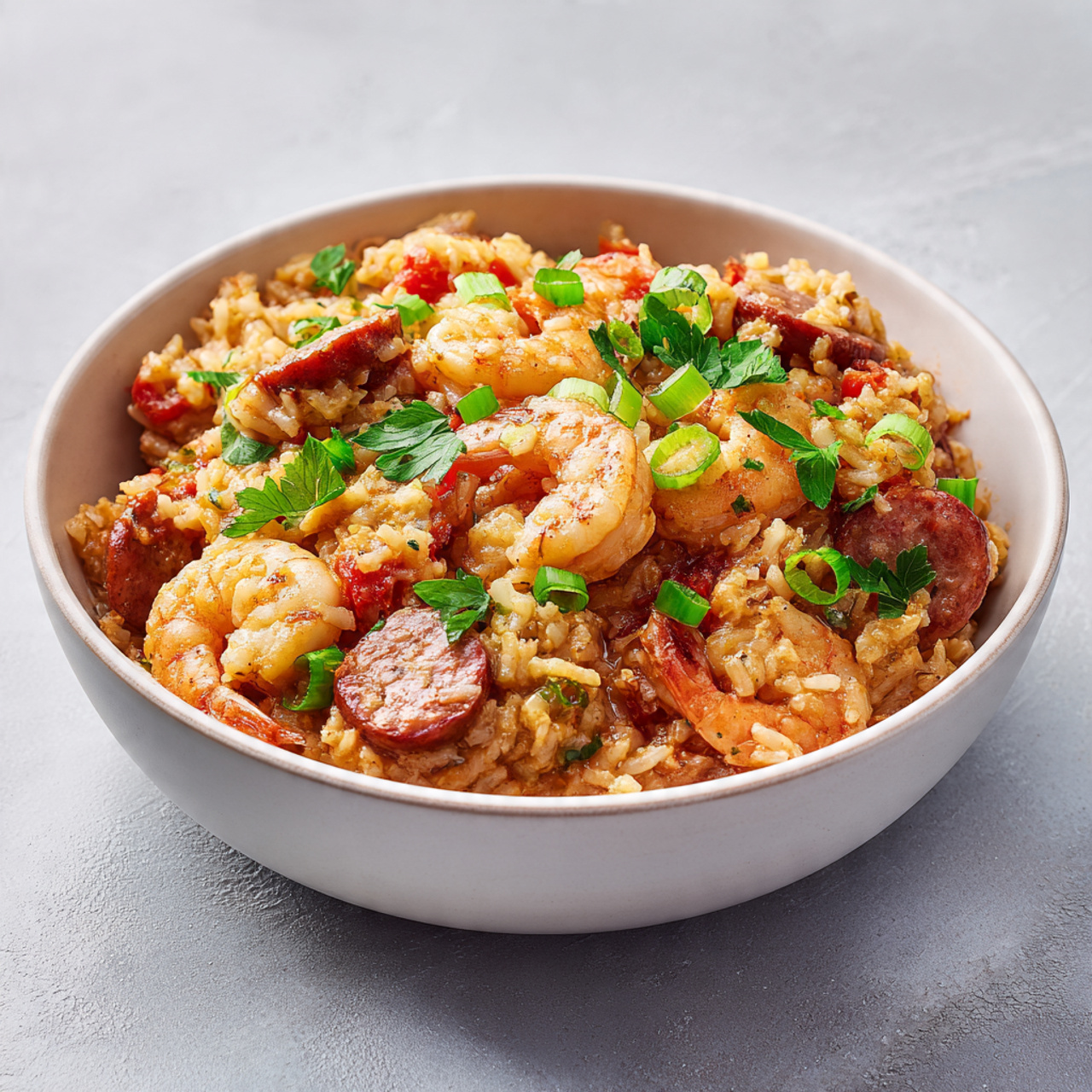
Shrimp and Sausage Jambalaya
This bold and hearty Shrimp and Sausage Jambalaya is a true Creole classic packed with smoky andouille, plump shrimp, and perfectly seasoned rice cooked in one pot. It is the ultimate easy jambalaya recipe for feeding a crowd with big, satisfying flavor.

The One-Pot Wonder That Brings Louisiana Right to Your Kitchen
If there is one dish that captures the soul of Louisiana cooking, it is jambalaya. This Shrimp and Sausage Jambalaya is everything you want in a weeknight dinner: deeply seasoned, impossibly satisfying, and built entirely in a single pot. It is smoky from the andouille, sweet and briny from the shrimp, and layered with the slow-built richness that only the Creole holy trinity of onion, bell pepper, and celery can deliver.
This is the kind of meal that makes people stop mid-bite and ask for the recipe. It is Creole-style jambalaya, meaning it uses crushed tomatoes for a saucy, brick-red base that soaks straight into the rice as it cooks. Once you make it, it will earn a permanent spot in your dinner rotation.
Why This Creole Jambalaya Recipe Works Every Time
A lot of easy jambalaya recipes sacrifice flavor for speed. This one does not. Here is what makes it stand out from the crowd:
- Browning the andouille first renders its fat and builds a caramelized fond on the bottom of the pot. That brown stuff is pure flavor, and the vegetables and liquid will pick it all up.
- Blooming the spices in the dry pot for 30 seconds before adding liquid wakes up every single Cajun jambalaya ingredient and deepens the overall taste dramatically.
- Cooking the shrimp last is non-negotiable. Adding them to the pot in the final minutes ensures they stay plump and tender rather than rubbery and overdone.
- A tight-fitting lid and low heat give the rice time to steam properly so it comes out fluffy, not gummy.
These are small techniques, but they are the difference between a good jambalaya and a truly great one.
The Right Tools Make Easy Jambalaya Even Easier
For a recipe like this Creole jambalaya with sausage, the single most important piece of equipment is a heavy, wide pot with a tight lid. A 5-quart or larger Dutch oven is ideal because it holds heat evenly, prevents hot spots that can scorch the rice, and gives you enough room to stir everything without losing ingredients over the side. A quality Creole seasoning blend also matters here since it does the heavy lifting on flavor. Using the right tools from the start sets you up for success.
Understanding the Creole Holy Trinity
Every great bowl of Creole style jambalaya begins with the same foundation: onion, celery, and green bell pepper. This combination is known as the Creole holy trinity, and it is the aromatic backbone of countless Louisiana classics from gumbo to etouffee.
When you cook the holy trinity low and slow in the rendered sausage fat, the vegetables soften, sweeten, and essentially melt into the dish. You will not find big chunks of them in the final bowl. Instead, they dissolve into the sauce and become the flavor itself. Do not rush this step. Give the vegetables a full five to six minutes to soften before you add the garlic and spices.
Chef's Tip: Use a wooden spoon to scrape up any browned bits from the bottom of the pot as the vegetables cook. This is called deglazing the fond, and it adds a deep, toasty richness to the jambalaya that you simply cannot replicate any other way.
Choosing Your Spicy Jambalaya Ingredients
The spice blend is where Cajun jambalaya ingredients really come to life. A good Creole seasoning typically includes paprika, cayenne, garlic powder, onion powder, black pepper, and dried herbs. You can buy a quality blend (Tony Chachere's and Zatarain's are both classics) or mix your own at home.
A few other ingredients worth highlighting:
- Andouille sausage: This smoked, heavily seasoned pork sausage is the traditional choice for Creole chicken and sausage jambalaya and shrimp versions alike. It brings smokiness and a gentle heat that no other sausage quite replicates.
- Long-grain white rice: This is critical. Short-grain or medium-grain rice will turn the dish starchy and clumped. Long-grain varieties stay separate and absorb the cooking liquid without breaking down.
- Hot sauce: A small amount stirred in during cooking seasons from within. More can always be passed at the table for heat lovers.
Tips for the Best Jambalaya Recipes, Easy Enough for Any Night
Whether this is your first time making jambalaya or your fiftieth, a few reminders before you start:
- Do not rinse the rice. Unlike some dishes, jambalaya benefits from the starch on the rice surface. It helps thicken the sauce slightly as it cooks.
- Measure your liquid carefully. Too much broth leads to soggy rice. Stick to the ratio in the recipe.
- Resist the lid. Once the rice goes in, put the lid on and leave it. Every time you lift it, you release steam and disrupt the cooking.
- Season at the end. Broth and Creole seasoning both carry salt. Taste the finished dish before adding more.
Ready to bring a little New Orleans heat to your dinner table? Here is the full recipe:
Shrimp and Sausage Jambalaya
This bold and hearty Shrimp and Sausage Jambalaya is a true Creole classic packed with smoky andouille, plump shrimp, and perfectly seasoned rice cooked in one pot. It is the ultimate easy jambalaya recipe for feeding a crowd with big, satisfying flavor.
Ingredients
- 12 oz andouille sausage, sliced into 0.5-inch rounds
- 1 lb large shrimp, peeled and deveined, tails on or off
- 2 tbsp olive oil
- 1 yellow onion, medium, diced
- 1 green bell pepper, diced
- 3 celery stalks, diced
- 4 garlic cloves, minced
- 14 oz crushed tomatoes, one standard can
- 2 1/2 cups chicken broth, low sodium preferred
- 1 1/2 cups long-grain white rice, uncooked
- 2 tbsp Creole seasoning, store-bought or homemade, adjust to taste
- 1 tsp smoked paprika
- 1/2 tsp dried thyme
- 1/2 tsp dried oregano
- 2 bay leaves, removed before serving
- 1 tsp hot sauce, such as Tabasco or Crystal, plus more to taste
- 4 green onions, sliced, for garnish
- 1/4 cup fresh parsley, chopped, for garnish
- 1 tsp kosher salt, or to taste
- 1/2 tsp black pepper, freshly ground
Instruction
Heat the olive oil in a large, heavy-bottomed Dutch oven or deep skillet over medium-high heat. Add the sliced andouille sausage and cook for 4 to 5 minutes, stirring occasionally, until browned on both sides. Remove the sausage with a slotted spoon and set aside, leaving the drippings in the pot.
Add the diced onion, bell pepper, and celery to the same pot. Cook over medium heat for 5 to 6 minutes, stirring often, until the vegetables have softened. This is the Creole 'holy trinity' and it builds the flavor base of your jambalaya.
Stir in the minced garlic and cook for 1 minute until fragrant.
Add the Creole seasoning, smoked paprika, dried thyme, dried oregano, salt, and black pepper. Stir everything together and cook for 30 seconds to bloom the spices.
Pour in the crushed tomatoes and chicken broth. Add the bay leaves and hot sauce. Stir to combine and bring the mixture to a boil.
Add the uncooked long-grain white rice and the browned sausage back into the pot. Stir once to distribute everything evenly. Reduce the heat to low, cover tightly with a lid, and cook for 20 to 25 minutes until the rice has absorbed the liquid and is fully cooked.
Uncover the pot and nestle the shrimp into the jambalaya. Replace the lid and cook for an additional 5 to 7 minutes over low heat until the shrimp are pink, curled, and cooked through.
Remove and discard the bay leaves. Taste and adjust seasoning, adding more hot sauce or Creole seasoning as desired.
Ladle the jambalaya into bowls and garnish generously with sliced green onions and fresh parsley. Serve immediately.
Equipment
- Large Dutch oven or deep heavy-bottomed skillet (at least 5-quart)
- Slotted spoon
- Sharp chef's knife
- Cutting board
- Measuring cups and spoons
- Tight-fitting lid
Notes
Serving, Storing, and Making It Your Own
Jambalaya is a complete meal on its own, but a few simple sides make it feel like a true Southern spread. Warm cornbread, a simple green salad, or a cold glass of sweet tea alongside a big bowl of this Creole jambalaya with sausage is all you need for a deeply satisfying dinner.
Variations worth trying:
- Add diced chicken thighs with the sausage for a heartier Creole chicken and sausage jambalaya.
- Stir in frozen okra during the last 10 minutes of rice cooking for extra body and a classic Louisiana touch.
- For a smoky vegetarian version, swap the sausage for smoked paprika-seasoned mushrooms and use vegetable broth.
Leftovers reheat beautifully with a splash of broth to loosen things up. Store in an airtight container in the refrigerator for up to three days, and you will be genuinely excited for lunch the next day. This is the rare meal that is arguably even better the second time around, once all those bold spices have had time to fully settle in.